
How to Build an IKEA Milsbo Plant Cabinet
The IKEA Milsbo cabinet has become one of the most popular ways to create an indoor greenhouse for tropical plants. With a few simple modifications, the Milsbo can be converted into a humidity-controlled plant cabinet that is perfect for growing plants like anthuriums, philodendrons, alocasias, and other tropical species.
Plant cabinets allow you to create a stable environment with controlled humidity, lighting, and airflow, making them ideal for rare or humidity-loving plants.
In this guide we will walk through everything you need to build an IKEA Milsbo plant cabinet, including lighting, airflow, humidity control, and the accessories that make your setup easier to manage.
Why Use an IKEA Milsbo for a Plant Cabinet
The IKEA Milsbo cabinet is a favorite among plant collectors because it provides the perfect structure for building a controlled plant environment.
Benefits of using a Milsbo cabinet include:
- Glass panels that allow light to pass through easily
- A sturdy metal frame that supports mounted accessories
- Plenty of vertical growing space
- A clean modern look that fits well in most homes
When properly set up, a Milsbo cabinet can maintain humidity levels between 60% and 80%, which is ideal for many tropical plants.
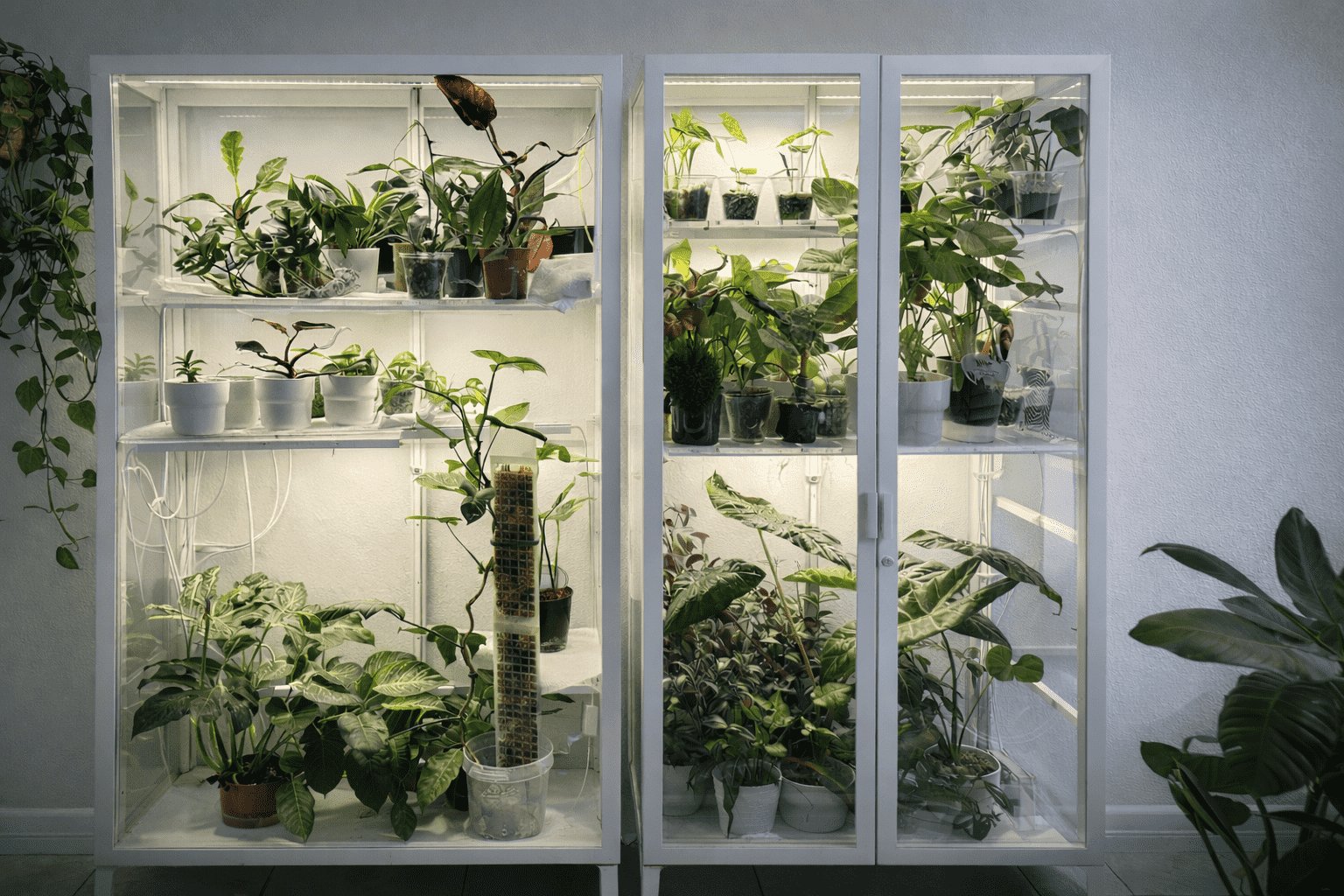
Step 1 – Assemble the Milsbo Cabinet
Air circulation is critical inside a plant cabinet.
Without airflow, humidity can build up too much and create conditions that lead to mold, mildew, or fungal issues.
Most plant cabinet setups include one or more small fans that gently circulate air throughout the cabinet.
Benefits of adding airflow include:
- Preventing stagnant air
- Reducing mold risk
- Strengthening plant growth
- Maintaining consistent temperature
Small USB or computer fans are commonly used in plant cabinets because they are compact and quiet.
Step 2 – Install Grow Lights
Lighting is one of the most important components of a plant cabinet.
Because the Milsbo cabinet is typically placed indoors, plants will usually need supplemental lighting to grow properly.
Popular lighting options include:
- LED grow light bars
- LED strip lights
- Barrina grow lights
These lights are commonly mounted to the top of the cabinet or underneath shelves to provide even light coverage.
Proper lighting ensures your plants receive enough light to thrive without relying solely on window sunlight.
Our Recommendations:
Step 3 – Add Air Circulation
Lighting is one of the most important components of a plant cabinet.
Because the Milsbo cabinet is typically placed indoors, plants will usually need supplemental lighting to grow properly.
Popular lighting options include:
- LED grow light bars
- LED strip lights
- Barrina grow lights
These lights are commonly mounted to the top of the cabinet or underneath shelves to provide even light coverage.
Proper lighting ensures your plants receive enough light to thrive without relying solely on window sunlight.
Our Recommendations:
Step 4 – Monitor Humidity and Temperature
Humidity control is one of the main reasons people build plant cabinets.
To properly monitor conditions inside your cabinet, you should install a digital hygrometer/thermometer.
These sensors allow you to track:
- Humidity levels
- Temperature
- Minimum and maximum readings
Many plant cabinet enthusiasts use smart hygrometers that connect to their phone and allow them to monitor cabinet conditions remotely.
Mounting the sensor inside the cabinet ensures you get accurate humidity readings where your plants are growing.
Our Recommendations:
Step 5 – Organize Cables and Equipment
Once lighting, fans, and sensors are installed, you will likely have several cables running inside the cabinet.
Organizing these cables helps keep your setup clean and prevents wires from interfering with plant growth.
Common cable management solutions include:
- Cable clips
- Cable routing brackets
- Pass-through holes or grommets
Keeping wires organized makes the cabinet look cleaner and simplifies maintenance.
Our Recommendations:
Step 6 – Arrange Your Plants
Once your equipment is installed, the final step is arranging your plants inside the cabinet.
Plants that benefit from plant cabinet environments include:
- Anthuriums
- Alocasias
- Philodendrons
- Begonias
- Moss poles with climbing plants
Because humidity is higher inside the cabinet, many tropical plants grow faster and produce healthier leaves.
It is best to space plants so that airflow and lighting reach all areas of the cabinet.
Tips for a Successful Plant Cabinet
Here are a few tips that experienced plant cabinet growers follow:
- Keep humidity between 60% and 80%
- Use fans to maintain airflow
- Avoid overcrowding plants
- Monitor temperature and humidity regularly
- Clean the cabinet occasionally to prevent mold
With the right setup, a plant cabinet can create an ideal micro-environment for tropical plants.
Recommended Plant Cabinet Accessories
The right accessories can make a big difference when setting up a plant cabinet.
Many growers add mounts and accessories that allow them to position sensors, fans, and other equipment exactly where they need them.
We offer a full line of accessories to help keep the cabinet organized while improving airflow and monitoring.
Fan mounts
SHOP NOW
Cable Management
SHOP NOW
Light Mounts
SHOP NOW
Shelf Brackets
SHOP NOW
Hygrometer Mounts
SHOP NOW
Plant Trays
SHOP NOW
Final Thoughts
Building an IKEA Milsbo plant cabinet is one of the best ways to create a controlled environment for tropical plants indoors.
With proper lighting, airflow, and humidity monitoring, a plant cabinet can support healthy plant growth while also creating a beautiful display.
Whether you are growing rare houseplants or simply want a dedicated space for humidity-loving plants, the Milsbo cabinet is a great foundation for your setup.
FAQs
What humidity should a plant cabinet be?
Most tropical plants thrive in humidity levels between 60% and 80%. Some plants like anthuriums and certain begonias may prefer even higher humidity levels. A hygrometer can help you monitor and maintain the ideal conditions inside your plant cabinet.
Where should a hygrometer be placed in a plant cabinet?
A hygrometer should be placed around the middle height of the cabinet, away from direct airflow from fans. This helps ensure the readings accurately reflect the conditions your plants are experiencing.
Do plant cabinets get mold?
Plant cabinets can develop mold if there is too much humidity and poor airflow. Adding small circulation fans and avoiding overcrowding plants helps prevent mold and keeps the environment healthy for your plants.
How do you increase humidity in a plant cabinet?
Humidity can be increased by:
- Adding more plants
- Using moss poles or moist substrates
- Reducing airflow slightly
- Adding small water trays inside the cabinet
Most plant cabinets naturally maintain higher humidity once plants are established.
Do plant cabinets need ventilation?
Yes. Even though plant cabinets are meant to hold humidity, some airflow is important. Small fans help circulate air and prevent stagnant conditions that can lead to mold or pests.
What plants grow best in a Milsbo cabinet?
Plants that love humidity grow especially well in plant cabinets, including:
- Anthuriums
- Alocasias
- Philodendrons
- Begonias
- Moss pole climbing plants
These plants benefit from the stable humidity and lighting conditions inside the cabinet.
Can you use the IKEA Milsbo cabinet without modifications?
Yes, but most plant enthusiasts add lighting, fans, and humidity sensors to improve growing conditions. These upgrades help create a stable environment that tropical plants thrive in.
How do you prevent condensation in a plant cabinet?
Condensation can occur if humidity levels get too high. You can reduce condensation by:
- Adding airflow with small fans
- Slightly lowering humidity levels
- Opening the cabinet occasionally for ventilation
Do you need grow lights for a plant cabinet?
Most indoor plant cabinets benefit from grow lights because natural light alone is usually not enough for healthy plant growth. LED grow lights are commonly used because they are energy efficient and produce minimal heat.