
Do Plant Cabinets Need Fans?
Plant cabinets create a controlled environment that allows tropical plants to thrive indoors. However, once you start sealing a cabinet and adding grow lights, humidity, and multiple plants, air circulation becomes extremely important.
Without proper airflow, plant cabinets can quickly develop problems such as mold, stagnant humidity pockets, and overheating from grow lights.
Adding fans is one of the most important upgrades you can make to a plant cabinet. This guide explains why airflow matters, how many fans you need, and the best way to position them inside an IKEA Milsbo or other greenhouse cabinet setups.
Why Airflow Matters in a Plant Cabinet
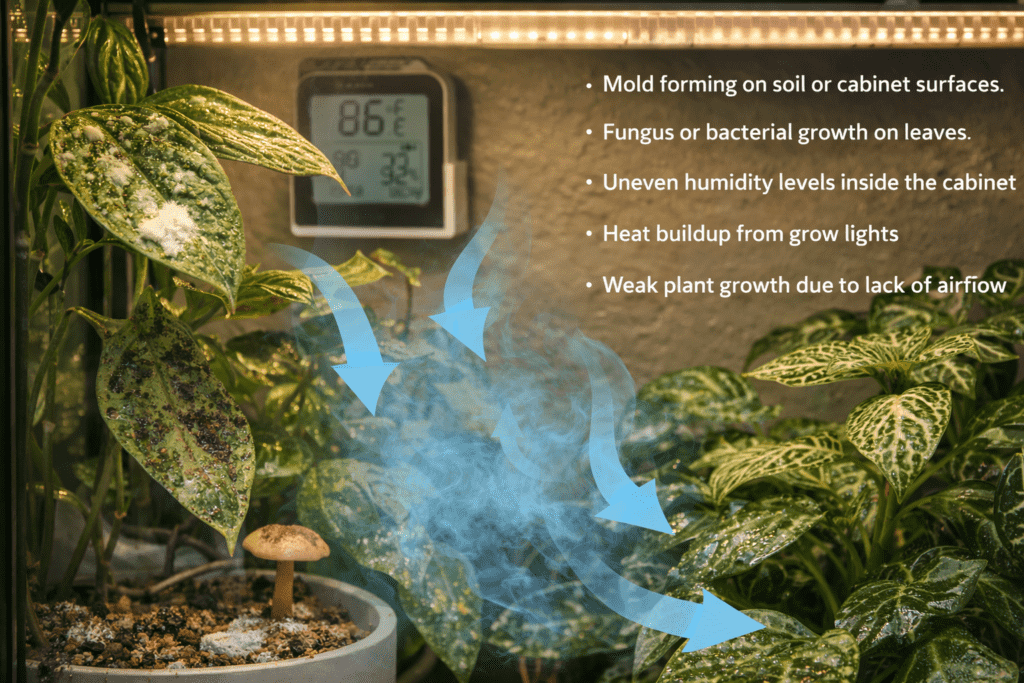
Inside a plant cabinet the air can easily become stagnant. When air stops circulating, moisture builds up on leaves and surfaces.
This can lead to several common issues:
- Mold forming on soil or cabinet surfaces
- Fungus or bacterial growth on leaves
- Uneven humidity levels inside the cabinet
- Heat buildup from grow lights
- Weak plant growth due to lack of airflow
In nature, plants constantly experience airflow from wind and natural ventilation. Adding fans helps recreate that environment inside your cabinet.
Good airflow helps plants develop stronger stems, healthier leaves, and more stable humidity levels.
Benefits of Using Fans in a Plant Cabinet
Installing fans inside your cabinet provides several key benefits:
Prevents Mold
Moving air helps prevent moisture from settling on surfaces and soil.
Stabilizes Humidity
Fans distribute humidity evenly throughout the cabinet.
Reduces Hot Spots
Grow lights can generate heat. Air circulation spreads this heat out and prevents overheating.
Improves Plant Health
Plants exposed to gentle airflow tend to grow stronger stems and healthier foliage.
How Many Fans Does a Plant Cabinet Need?
For most cabinet setups, 1–2 small fans are usually enough.
Small Cabinets
Examples: IKEA Rudsta, small greenhouse cabinets
Recommended setup:
- 1 fan near the top of the cabinet
Medium Cabinets
Examples: IKEA Milsbo Wide
Recommended setup:
- 1 fan near the top
- 1 fan near the middle or bottom
Large Cabinets
Examples: IKEA Milsbo Tall
Recommended setup:
- 2 fans placed at different heights
This creates airflow throughout the entire cabinet.
Best Fan Size for Plant Cabinets
The most common fan sizes used in greenhouse cabinets are 80mm and 120mm computer-style fans.
These fans are ideal because they are:
- Quiet
- Energy efficient
- Easy to mount
- Widely available
120mm fans are typically preferred because they move more air while remaining very quiet.
Where to Place Fans in a Plant Cabinet
Fan placement is important for creating effective airflow.
The most common placement options are:
Top Corner Mount
A fan placed in the upper corner helps circulate warm air created by grow lights.
Middle Shelf Circulation
A fan mounted near the middle shelf helps distribute humidity evenly.
Bottom Circulation
A lower fan pushes air upward through the cabinet.
The goal is to create gentle air movement throughout the cabinet without blasting plants directly.
Corner Mounting is the Most Popular Setup
One of the cleanest ways to install fans in a plant cabinet is using a corner mount system.
Corner fan mounts allow you to attach a fan neatly in the cabinet corner while keeping wires organized and out of the way.
Benefits of corner mounts:
- Keeps the fan out of plant space
- Provides better airflow direction
- Maintains a clean cabinet setup
- Allows easy adjustment of airflow direction

Do Fans Lower Humidity?
Fans themselves do not remove humidity from a cabinet.
Instead, they help distribute humidity evenly throughout the space.
If humidity is too high, fans combined with small ventilation gaps can help stabilize moisture levels.
Most tropical plant cabinets operate best between:
60% – 85% humidity
Depending on the plant species.
How Long Should Cabinet Fans Run?
Since plant cabinets are often located inside living spaces, quiet fans are ideal.
Many cabinet builders prefer:
- USB powered fans
- low-noise PC fans
- brushless computer fans
These fans are extremely quiet while still moving enough air for healthy plant growth.
Quiet Fans Are Best
For larger plant cabinets, using multiple hygrometers can be helpful.
This allows you to monitor differences between the top and bottom of the cabinet.
Benefits include:
- Identifying temperature differences near lights
- Detecting humidity pockets near plants
- Improving airflow adjustments
Many experienced plant cabinet growers use two sensors for more accurate monitoring.
Recommended Setup for IKEA Milsbo Cabinets
A common airflow setup for Milsbo cabinets looks like this:
Top corner fan → circulates warm air
Middle fan → distributes humidity
Optional lower fan → pushes air upward
This arrangement creates a gentle circular airflow pattern inside the cabinet.
Final Thoughts
Air circulation is one of the most important factors in maintaining a healthy plant cabinet environment. Even a small fan can dramatically improve airflow, prevent mold, and keep humidity levels stable.
When setting up your plant cabinet, consider fan placement early so airflow reaches all levels of the cabinet.
A clean mounting solution can make installation easier while keeping your cabinet looking organized and professional.
FAQs
Do plant cabinets really need fans?
Yes. Without airflow, mold and humidity pockets can easily develop..
Will fans dry out my plants?
No. Gentle airflow actually helps plants grow stronger and healthier.
Are two fans better than one?
For larger cabinets like the Milsbo Tall, two fans create better airflow coverage.
Should fans blow directly on plants?
It’s best to create indirect airflow, not strong direct wind.